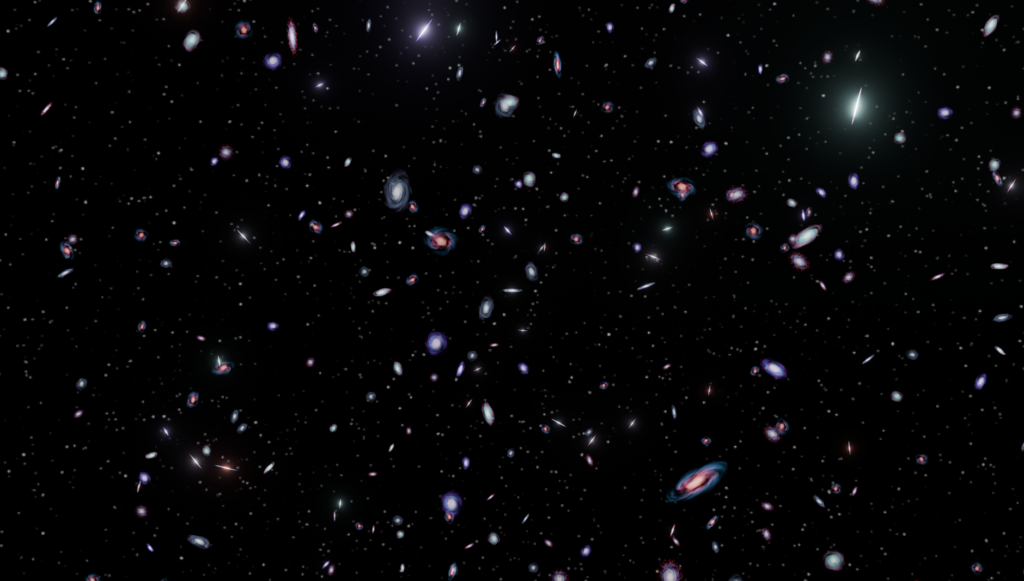
The European Space Agency’s Euclid telescope has released its first major data set, cataloguing over 900 million galaxies and about 15,000 strong gravitational‑lensing candidates.
Posts tagged as “dark matter”
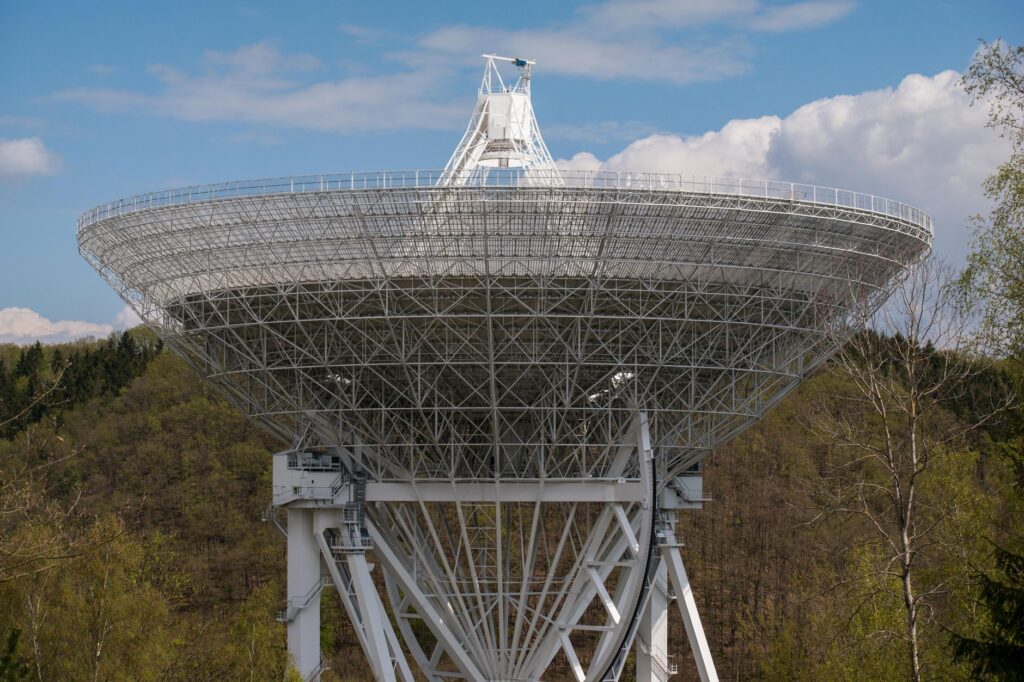
The ESA Euclid mission released its first major data set, mapping over a billion objects and opening new avenues for dark matter and dark energy research.
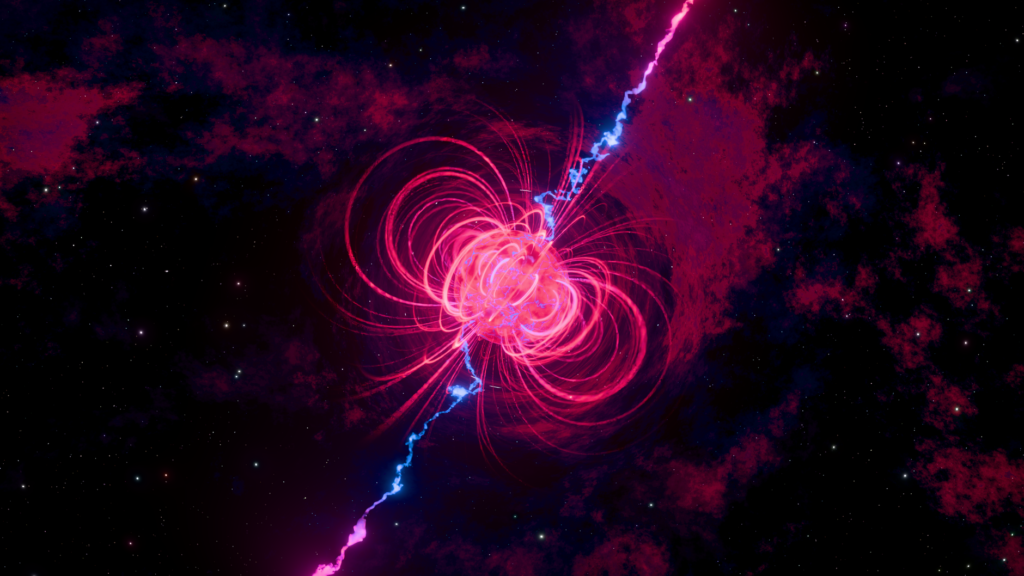
A Harvard‑Smithsonian team used the Frontier supercomputer to create Lumina, a billion‑light‑year‑scale simulation of the universe’s first two billion years.
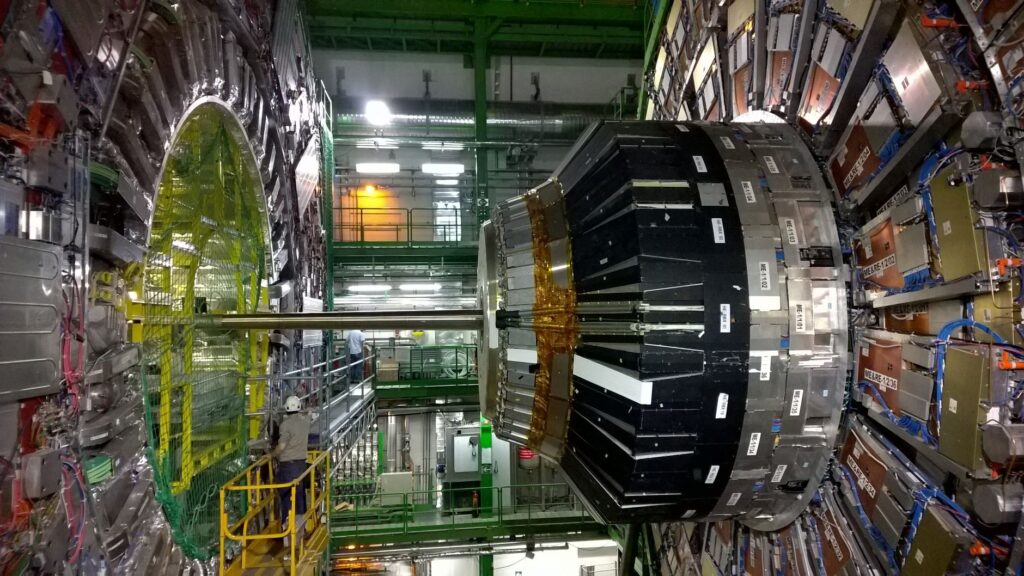
An international team behind the LZ detector observed a single high‑energy event in June 2023 that has a 0.5% chance of being background noise, sparking cautious optimism about a possible dark‑matter interaction.

The LUX‑ZEPLIN collaboration reports a lone, unexplained particle event in its underground xenon detector that matches predictions for a dark‑matter interaction, though it falls short of a confirmed discovery.
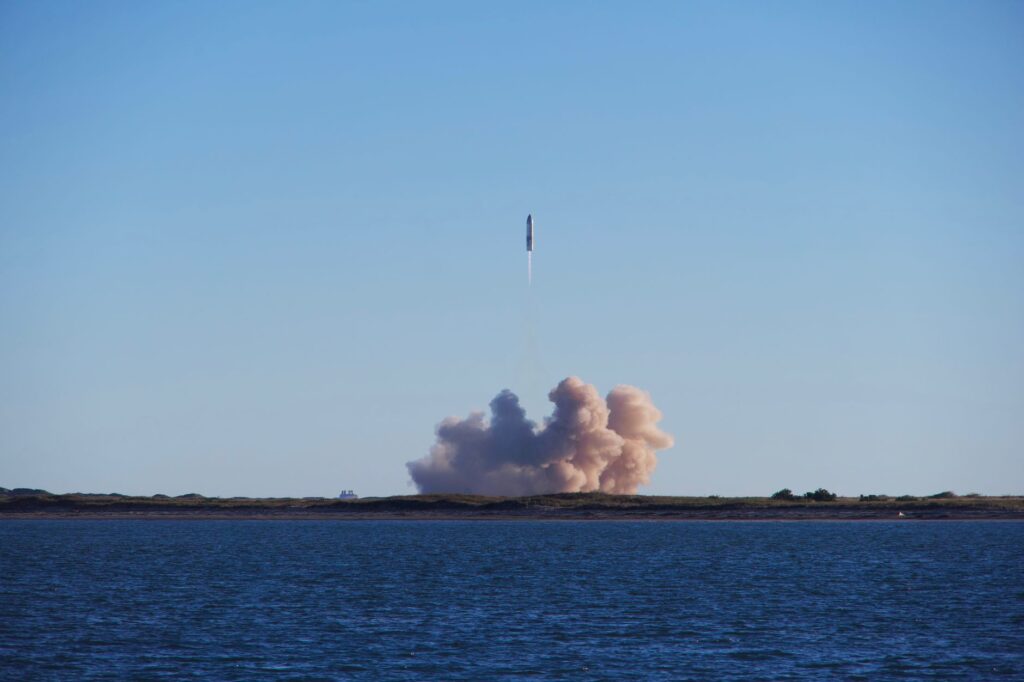
NASA lifted off the $4.3 b Roman Space Telescope on a Falcon Heavy, beginning a three‑month trek to Lagrange Point 2 to map billions of stars, probe dark energy and hunt thousands of new exoplanets.

Scientists at the Sanford Underground Research Facility recorded a single, unexplained particle interaction deep underground, a result that could represent the first hint of dark matter.

New research has not ruled out self-annihilating dark matter as the cause of a mysterious gamma-ray glow from the Milky Way's center, known as the Galactic Center Excess.

A new study proposes a self-interacting form of dark matter that could explain observed cosmic phenomena like scarred stellar streams, gravitational lenses, and unusual star clusters.