US Supreme Court to Decide: Children of Illegal Parents Have a Constitutional Right to Citizenship or not
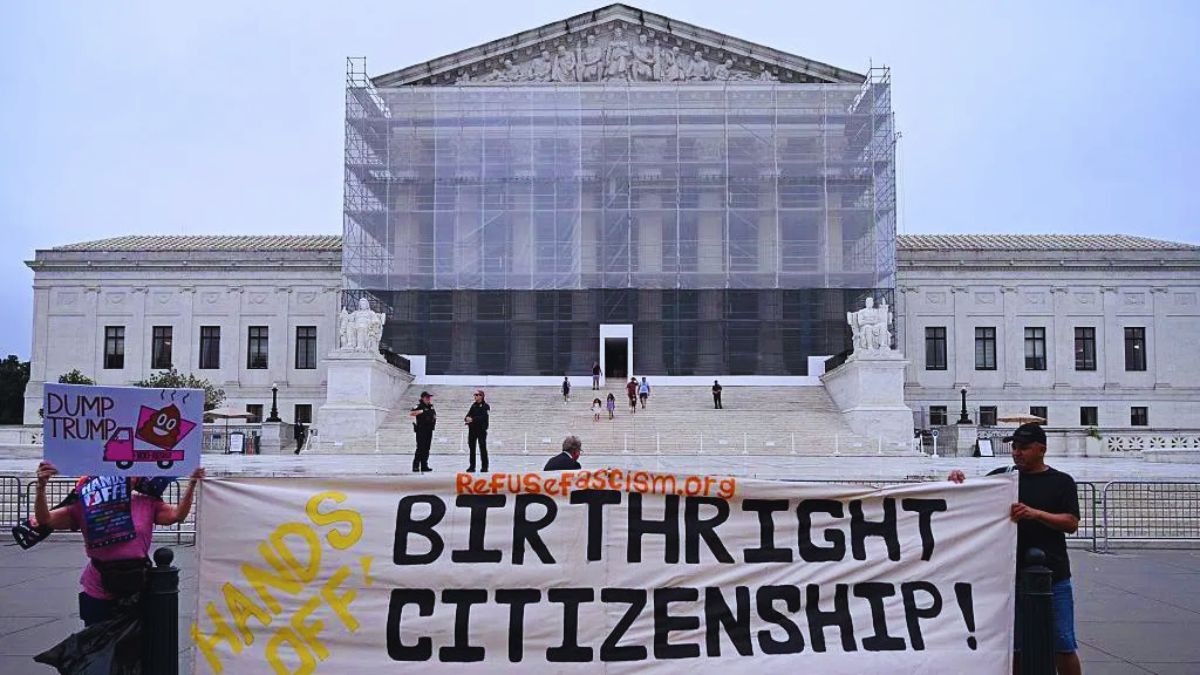
The U.S. Supreme Court has agreed to take up a major case that could reshape one of the country’s oldest citizenship principles: birthright citizenship. The decision comes months after President Donald Trump signed an executive order on his first day back in office seeking to end the automatic citizenship for children born in the United States to parents who are in the country illegally. That order was quickly put on hold by several lower courts, and now the nation’s highest court will have the final say.
However, no official date has been scheduled yet for oral arguments, and a ruling is likely many months away. Still, the case carries enormous weight. Whatever the Supreme Court decides will directly impact the Trump administration’s immigration policies and could possibly redefine who qualifies as an American citizen.
Supreme Court to Review Lower Court Ruling
The announcement came the same day President Trump attended the 2026 FIFA World Cup draw on December 5. The Supreme Court confirmed it would review a lower court’s decision that rejected Trump’s claim that children born to parents who are in the U.S. illegally or temporarily—are not automatically entitled to U.S. citizenship.
Throughout his campaign and presidency, Trump has argued that the 14th Amendment was intended only for those “born in and subject to the jurisdiction of the United States,” a phrase he believes excludes certain groups such as undocumented immigrants and temporary visa holders.
For more than a century and a half, however, the 14th Amendment has been widely interpreted to guarantee citizenship to nearly every child born on American soil. Exceptions apply only to children of foreign diplomats or enemy military forces.
The amendment’s text reads:
“All persons born or naturalized in the United States, and subject to the jurisdiction thereof, are citizens of the United States.”
Trump’s executive order seeks to narrow this definition significantly. It is part of his broader effort to reshape the U.S. immigration system and address what his administration has described as “serious national security and public safety concerns.”
Civil Rights Groups Push Back
Civil liberties organizations strongly oppose the policy. Following the Supreme Court’s announcement, the American Civil Liberties Union (ACLU) issued a sharp response, saying the administration is attempting to undo a core constitutional guarantee.
“No president can change the 14th Amendment’s fundamental promise of citizenship,” said Cecillia Wang, the ACLU’s national legal director. The United States is one of about 30 countries worldwide, mostly in the Americas, that offer automatic citizenship to anyone born within national borders.
After Trump signed the order, multiple federal judges blocked it, ruling that it violated the Constitution. Two federal appeals courts also upheld the legal document preventing the order from taking effect. In June 2025, however, the Supreme Court ruled that those injunctions may have gone too far – although the court did not address the birthright citizenship issue itself.
That paved the way for President Trump to appeal again.
Understanding Birthright Citizenship
The 14th Amendment of the US Constitution was carried out in 1868, shortly after the American Civil War, to settle the citizenship status of formerly enslaved people. Since then, the birthright citizenship has applied to babies born to citizens, legal immigrants, and undocumented immigrants alike.
According to estimates from the Migration Policy Institute and Penn State’s Population Research Institute, ending birthright citizenship could lead to:
- 255,000 children born in the U.S. each year without citizenship
- 2.7 million more unauthorized immigrants by 2045
- 5.4 million more by 2075
As the country waits for the Supreme Court’s ruling, the future of one of America’s defining principles – citizenship by birth hangs in the balance.

Helene Elliott is the Lead Science & Space Reporter at News Raise. She reports on aerospace missions, astrophysics discoveries, quantum research, and environmental technology.